

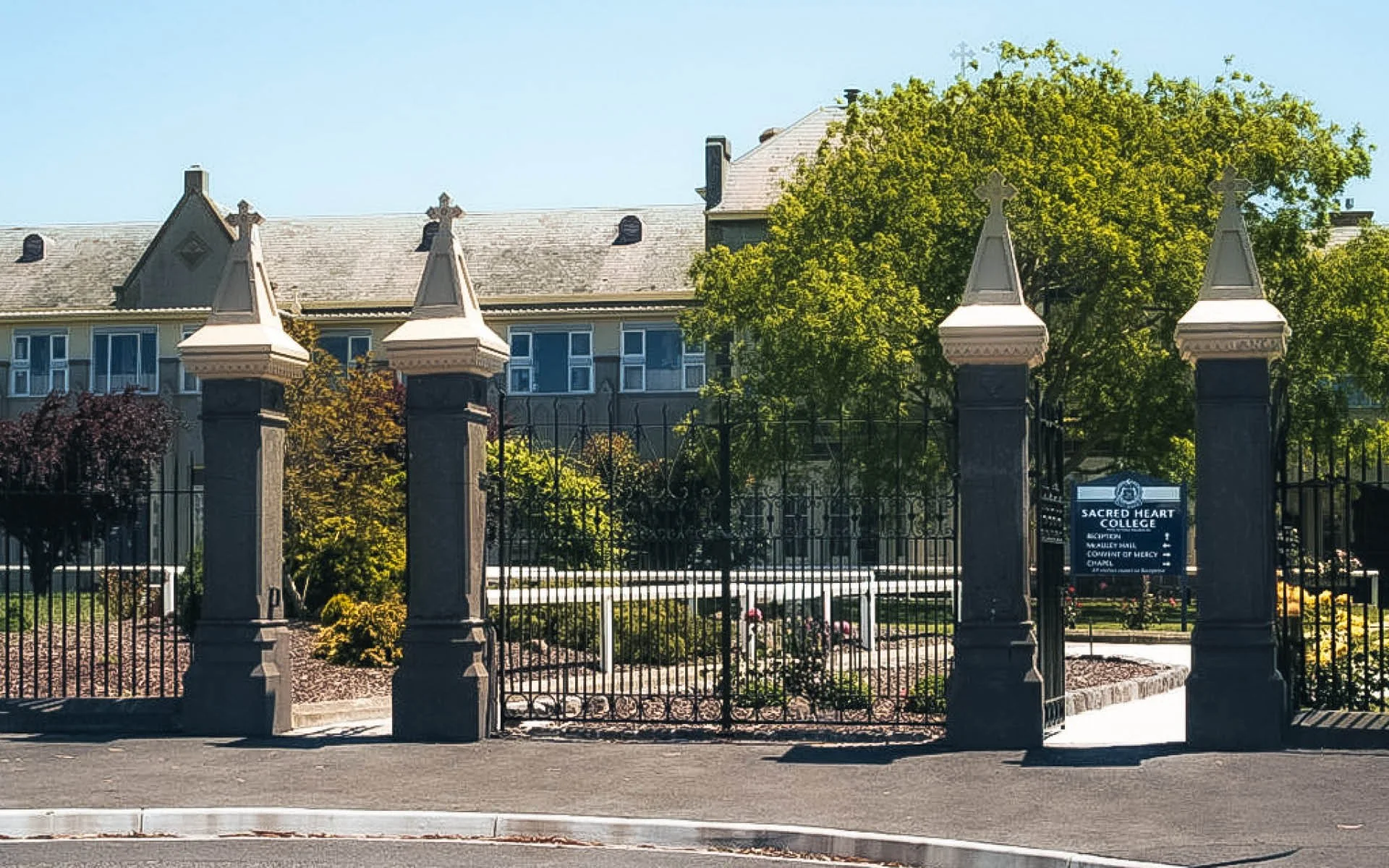
Sacred Heart College
Location: Geelong, VIC
Typology: Education
S+H Services: Structural Engineering
Founded on the historic “Sunville” mansion and later developed into one of Victoria’s earliest convent institutions, Sacred Heart College has grown since 1860 into a prominent educational and cultural landmark. Its bluestone buildings, Gothic Revival chapel, decorative stencilling, and intact 1884 Fincham pipe organ express a rich religious and architectural legacy.
The project focused on strengthening the entrance gate stone masonry piers, which had been damaged multiple times by vehicle impacts. The client sought a solution that would ensure long‑term stability while protecting the heritage stonework that defines the school’s entry sequence. Constraints included working carefully within sensitive historic fabric and minimising any visual or material disruption.
The entrance gate piers had experienced repeated impact damage, prompting the need for a strengthening approach that protected the stonework without altering its appearance. Engineering assessments considered different vehicle load scenarios, giving the client clear options for the level of strengthening required.
The final strengthening solution introduced new dowels, epoxy, and mortar selected for compatibility with the original stone masonry. This ensured the repairs performed effectively without causing long‑term deterioration or aesthetic change. The methodology was also designed to streamline construction by avoiding delays associated with epoxy curing between stone placements.
The intervention provided targeted reinforcement that reduced the likelihood of future impact‑related failures, improved safety at a key campus entry point, and preserved the character of a highly significant heritage element.
Key Outcomes
Strengthened gate piers to improve resilience against future vehicle impacts.
Material‑compatible repairs preserving the appearance and integrity of original stonework.
Clear design options enabling informed decisions around vehicle loading scenarios.
Efficient construction methodology reducing on‑site disruption